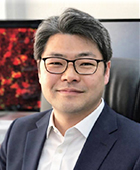
Won-seok, Jeung is a Professor in the Department of Biological Sciences at KAIST and Deputy Director of the IBS Vascular Research Unit.
As a neuroscientist, he investigates the complex interactions between the brain’s immune system and neural circuits. By comparing and analyzing the functions of astrocytes and microglia, he has elucidated key mechanisms underlying synapse formation, pruning, and the regulation of learning and memory. Notably, he was the first to globally demonstrate that astrocytes play a leading role in synapse pruning, a process essential for maintaining healthy neural circuits and consolidating memories. In recognition of his groundbreaking contributions—specifically, revealing ERBB4 as a critical factor in synaptic loss and the early progression of Alzheimer’s disease—he was honored with the Achievement Award for Life Sciences at the 20th Mystery of Life Awards, significantly broadening our understanding of brain disease mechanisms and potential therapeutic strategies.
Fr. Paolo Benanti
Pontifical Gregorian University, Rome
Field of Award
Achievement Award for Humanities and Social Sciences
Details of achievements
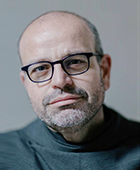
Fr. Paolo Benanti is a professor of moral theology at the Pontifical Gregorian University in Rome and a full member of the Pontifical Academy for Life. He is a moral theologian who has been active internationally in the fields of artificial intelligence and technology ethics.
Combining engineering expertise with theological reflection, he has explored the relationship between technological advancement and human dignity, and has continued his research and writing with a focus on algorithmic ethics, neuroethics, and posthumanism. In particular, he proposed the “Human in the Loop” concept, which emphasizes responsible human intervention in AI decision-making, and made a key contribution to the drafting of the “Rome Call for AI Ethics.” He was selected as an Achievement Award winner for the Humanities and Social Sciences category in recognition of his contributions to expanding the horizons of bioethics in the digital age and fostering technology governance centered on human dignity and the common good.
Professor Kim Soo-jung
College of Nursing, The Catholic University of Korea
Field of Award
Encouragement Award for Humanities and Social Sciences
Details of achievements
Soo-jung, Kim is a Professor at the College of Nursing at The Catholic University of Korea, specializing in research, education, and international collaboration within hospice, palliative care, and pediatric palliative nursing.
Drawing on her extensive clinical background in the neonatal intensive care unit (NICU), her research focuses on ethical issues in early- and end-of-life care, the moral distress of nurses, and the implementation of family-centered care. She has successfully developed end-of-life care protocols for neonatal and pediatric patients, as well as a tailored palliative care model for the NICU. Furthermore, in recognition of her dedication to establishing the values of life dignity and human-centered care in clinical practice—driven by her impactful work with the WHO Collaborating Center and various domestic and international palliative care societies—she was honored with the Encouragement Award in the Humanities and Social Sciences at the 20th Mystery of Life Awards.
The Human Resource Development Foundation (HRDF) was established in 1993 by Dalit activists in the Tamil Nadu region of India and has been working to restore the dignity and rights of the Dalit community, which has long suffered discrimination and exclusion under the caste system.
Through human rights advocacy, legal support, education, and community organizing, HRDF helps Dalits become active agents in their own lives and has strived in particular to protect the lives and ensure decent living conditions for women and children. Recognized for its contributions to expanding the protection of life into the restoration of dignity and self-reliance through initiatives such as clean water provision, disaster relief, land reclamation campaigns, organic farming, and women’s cooperative activity, HRDF was selected as an Encouragement Award recipient for Activities.